Showing posts with label Matthew 16. Show all posts

Sunday, February 15, 2026

"Eyewitnesses of His Majesty" (2 Peter 1:16-21)

Listen to today's Sounding the Scriptures POPcast here! 

Grace, mercy, and peace be to you from God our Father and from our Lord and Savior Jesus Christ! Amen! Dear brothers and sisters in Christ:


“For we did not follow cleverly devised myths when we made known to you the power and coming of our Lord Jesus Christ, but we were eyewitnesses of His majesty” (2 Peter 1:16).


The attacks of Satan and the fallen world come upon the flock of Christ’s Church sooner or later. And this attack is as old as Eden: “Did God really say?” (Genesis 3:1) asked Satan in the form of a serpent.


False teachers under the control of Satan were disparaging the reliability of Peter. And not just Peter, but the other apostles, and even the message of the Old Testament prophets.


Thanks be to God that Peter came to realize the deadly peril of these false teachers, since they were denying the power and coming of Jesus the Christ. You see, these false teachers, these heretics, were leading people to doubt that Jesus is fully and completely God, and that Jesus works on the behalf of all people’s lives. These false teachers, these heretics, were leading people to think that Jesus was never coming back and that they were not accountable to Jesus for their beliefs and their own lives. Does this sound familiar? Remember those words of the serpent: “You will not surely die” (Genesis 3:4). But as we know, “the wages of sin is death” (Romans 6:23a).


These heretics were making up “cleverly devised myths” (2 Peter 1:16) and they believed that if they would tell these lies long enough and loudly enough, then more and more people would start to believe the lie, no matter how shocking and no matter how outrageous.


So, like the Apostle Paul, Peter knew that the foundation of all Christian doctrine was the message of the prophets and the apostles. And without that sure bedrock, the Christian faith would come crashing down.


And so, with this in mind, Peter tells of a moment in time that changed his life. Peter tells of the Transfiguration of Our Lord upon that mountaintop. After Jesus went on a retreat by Himself, six days later He “took with Him Peter and James, and John his brother, and led them up a mountain by themselves” (Matthew 17:1). There, Jesus was transfigured before them. Jesus was glowing with the brightness of the presence of God Himself. Jesus’ face shone like the sun. And His clothes shone white; whiter than today’s Clorox could ever bleach them!


There, upon that mountaintop, surrounding the shining Messiah was a bright cloud that Peter calls the “Majestic Glory” (2 Peter 1:17).


In the Old Testament times, “the glory of the LORD” referred to an appearance of God in cloud and fire to mark a significant moment in His plan of salvation. God appeared to Moses in a burning bush. God appeared to the people of Israel and to the Egyptian army as a pillar of cloud and fire. God appeared in a cloud at the dedication of the temple in Jerusalem. Through this “glory,” God signaled His approval and His presence among His people.


There, upon that mountaintop, surrounding Jesus was “a bright cloud” (Matthew 17:5) and from that bright cloud, God the Father demonstrated His approval of His only-begotten Son saying: “This is My beloved Son, with whom I am well pleased; listen to Him” (Matthew 17:5).


Like a lawyer making his case, Peter declares: “We ourselves heard this very voice from heaven, for we were with Him on the holy mountain” (2 Peter 1:18). In the Greek, Peter is even more forceful than the ESV. Literally, Peter is saying, “We, we heard the voice!” This “hemeis ekousamen” is a double-second-person plural showing further credibility as Peter emphasizes that this voice was not just heard by him, but by also James and John!


We, too, also have a problem with our old Adam, our old sinful nature, because, so often, we are not convinced by the Word of God. And Peter, too, fell into this temptation. For after hearing Jesus say that He must be crucified and rise from death, Peter rebuked Him saying, “Far be it from you, Lord! This shall never happen to you” (Matthew 16:22). And after Jesus said Peter would deny that he ever knew Him, what did Peter say? “Lord, I am ready to go with you both to prison and to death”(Matthew 22:33). But what did Peter end up doing? He denied that he ever knew Jesus and at once a rooster crowed. Then Peter remembered Jesus saying to him: “Before the rooster crows today, you will deny Me three times” (Matthew 22:61). 


We, too, are prone to such temptations and such failings. Satan whispers to you: “Can you really trust the testimony of men who lived two-thousand years ago?” Others may say, “Jesus didn’t do enough for you, you must do good works to please God.” Even, others may say, “You know, God is still speaking but only through your feelings and your desires, so don’t trust those old words of the Bible.”


We each face so many temptations. And the Old Adam in all of us is often all too willing to listen and deny the eternal truth of which the Bible speaks. We do like to get credit for being a “good Christian” by doing “good works.” We would rather enjoy following those who preach “cleverly devised myths” rather than following the Word of the prophets and the apostles. And when those moments come: repent! Repent and ask Jesus for your forgiveness.


Now, Peter was not just an eyewitness. He was also an earwitness. He saw the “Majestic Glory,” but he also heard the voice of God the Father.


There were three times in Christ’s earthly ministry where God the Father boomed His voice over His only-begotten Son. First, at His Baptism in the Jordan, where John the Baptist anointed Jesus for His work of salvation. Second, upon the Mount of Transfiguration to the delight of three terrified men and two great prophets: Moses and Elijah. And third, during Holy Week, when God the Father confirmed that Christ’s work was indeed bringing Him glory. 


Each time God the Father’s voice was boomed, He forcefully proclaimed His love, His approval, and His pleasure in His only-begotten Son for His determination to go to the cross for sinful mankind.


This plan of salvation was not a “cleverly devised myth” of man, but this plan was the will of God from eternity. This plan called for sacrificial blood to be spilled. This plan called for a perfect sacrifice: a sacrifice without sin, stain, or blemish. This blood of the Son of God would become a light to the world, glowing from the very face of Jesus upon the Mount of Transfiguration.


This plan of salvation is the will of God the Father and Jesus carries out the plan until it is finished. 


For Peter, James and John who witnessed the glory of God’s Son and heard the voice of God the Father, their faith would often become shaky, to put it mildly. They often heard from their Lord, “O you of little faith.” Yours and my faith can also get shaky at times. For we often get disappointed by the subtle, hidden way in which Christ comes: the manger, the cross, in Scripture, the absolution, and the Lord’s Supper. Sometimes, we ask for more. But there He is. Jesus came in lowly form. He died a sinner’s death, yet without sin. We hear His voice in His Word, in the absolution, in the Lord’s Supper. And not only that, we receive Christ’s very body and blood under bread and wine for the forgiveness of our sins and for the strength of our faith.


Yes, Peter was blessed to have witnessed and heard what happened that day upon that holy mountain. And He certainly never forgot that moment. And He doesn’t want us to forget either. As soon as Christ, the Son of Man, was raised from the dead, Peter and the other apostles and disciples told of what Christ has done for them, for us, and for our salvation.


For us, let us never take for granted the “Majestic Glory” that we witness and hear at each Divine Service as we receive the fruits of Christ’s cross: forgiveness of our sins, life and salvation! God’s plan of salvation is finished! So let us give thanks for what the Lord has done! For His Word is sure and certain. With Peter, we too, are eyewitnesses to His Majesty! Amen.


The peace of God, which surpasses all understanding,

 keep your hearts and minds in Christ Jesus, our Lord. Amen.  

+ SOLI DEO GLORIA +

Sunday, January 18, 2026

"The Great Confessions" (Acts 4:8-13) - The Confession of St. Peter

Listen on Spotify and Apple Podcasts!

Watch the Divine Service on YouTube!

Grace, mercy, and peace be to you from God our Father and from our Lord and Savior Jesus Christ! Amen! Dear brothers and sisters in Christ:

“There is salvation in no one else, for there is no other name under heaven given among men by which we must be saved” (Acts 4:12).


In this season of Epiphany, we celebrate the revelation of Jesus to the world as God’s only Son, and our only Savior from the power of sin, death, and the devil. But today, in particular, we celebrate the confession of St. Peter, which is not really about Peter, but about his confession.


To His apostles, Jesus asked, “But who do you say that I am?” (Mark 8:29a). And this has been the question put to every person ever since. Who is Jesus?


Peter and the other apostles had seen Jesus do ordinary things. They saw Him eat and drink, grow tired and sleep, tell stories, and even pray. But they’d also seen Him do things that no other human being could ever do. They saw Jesus walk on water as though it were dry land! They saw Jesus command the winds and they obeyed! They saw Jesus multiply five loaves of bread and two fish to feed the vast multitudes. They heard Jesus speak words of truth that cut to the heart like no one ever could. Who is Jesus?


On that day in Caesarea Philippi, Peter spoke up for the Twelve and for all Christians of all ages saying, “You are the Christ!” (Mark 8:29b).


What Peter is saying on the behalf of the other apostles is that Jesus is the One for whom they and all of Israel have long waited. He is saying, “Jesus, You are the promised King of Israel from David’s line. Jesus, You are one of us, yet, You are so much more. Jesus, You are the Son of the living God!”


That is a great confession! Then Jesus says, “Blessed are you, Simon Bar-Jonah! For flesh and blood had not revealed this to you, but My Father who is in heaven” (Matthew 16:17).


This confession was a real turning point in Christ’s ministry. This great confession of faith at Caesarea Philippi is certainly worth remembering. But could there be a greater confession?


In our First Reading this morning from Acts 4, this same Peter speaks another confession as he and John stand before the Sanhedrin, the ruling council of the Jews and boldly speaks: “Let it be known to all of you and to all the people of Israel that by the name of Jesus Christ of Nazareth, whom you crucified, whom God raised from the dead – by Him” (Acts 4:10) we healed a lame man. This time, Peter’s life is on the line. Yes, his confession at Caesarea Philippi was certainly a great confession, but could this confession before the Sanhedrin be a greater confession?


Certainly, Peter’s confession at Caesarea Philippi took divine insight, but it didn’t take much courage. It didn’t take much courage to confess in front of Jesus and the others. To tell Jesus that He was the Christ was more like the “Sunday School answer.” Peter, then, had nothing to fear. But Peter, now, has much to fear. This confession to the Sanhedrin could mean his life is cut short.


And Peter doesn’t stop here, He continues with an even greater confession saying, “And there is salvation in no one else, for there is no other name under heaven among men by which we must be saved” (Acts 4:12). Such courage!


In our collect for today, we prayed: “Heavenly Father, You revealed to the apostle Peter the blessed truth that Your Son Jesus is the Christ. Strengthen us by the proclamation of this truth that we too may joyfully confess that there is salvation in no one else.” This prayer is also a confession.


But do we always joyfully confess that there is salvation in no one else but Jesus? This is easy for us to confess on a Sunday morning or Monday evening here in the friendly confines of Prince of Peace Lutheran Church, but what about out there? We are like Peter at Caesarea Philippi in here. But what is it like out there?


It certainly takes more courage to confess Jesus as the Christ out there, especially when the world is practically pagan. Many places of work openly mock Jesus. Many places of education openly mock Jesus. 


What about to your non-Christian friends or family? Do you joyfully confess Christ to them?


It certainly takes more courage than Peter at Caesarea Philippi for us to say to our non-believing friends and family that Jesus is the Christ, the Son of the living God. 


So, was Peter’s confession before the Sanhedrin his greater confession?


Certainly, Peter’s confession before the Sanhedrin was great – and it was indeed braver, because it could have cost him his life. 


But in the end, it was no greater than his confession at Caesarea Philippi. They are both great and greater as both confessions confessed Jesus to be the Christ.


Peter’s confession at Caesarea Philippi was great because Jesus is the suffering Christ, the Son of the living God. Peter’s confession before the Sanhedrin was great because Jesus, who was crucified, raised and ascended, saves us.


You see, both of Peter’s confessions were great, because Jesus is great.


So, no matter how you confess Jesus to your family or friends to help them understand His truth more fully, you are making a great confession.


But there is no greater confession than the one that so many of us made without even saying a word – it was when the Holy Spirit brought us to confess the triune God through our Baptism. This morning, Bella, though with words, made that great confession as the Holy Spirit brought her to the waters of Holy Baptism.


And we also make a great confession each time we, among our fellow brothers and sisters in Christ meet at the Communion rail to receive Christ’s Body and Blood for the forgiveness of our sins as we proclaim the Lord’s death until He comes again.


As we confess Jesus to be the Christ, this is the confession Christ Himself uses to build His Church. You see, those gates of hell do not stand a chance against this confession. Through this confession, the Holy Spirit still calls and gathers, enlightens and sanctifies believers. And through it, Jesus binds hearts to Him and builds up His Church as the very temple of God upon earth.


Today, is not only the day we remember St. Peter’s great confessions, as today is also Sanctity of Life Sunday. As fellow brothers and sisters in Christ, we not only confess Jesus as our Redeemer, but we also confess Jesus as our Creator. We confess with the Psalmist: “I praise You, for I am fearfully and wonderfully made. Wonderful are Your works; my soul knows it well” (Psalm 139:13-14).


Every single human being, from the least to the greatest, was carefully handmade by God. He planned our all our days even before He skillfully knit us together in our mother’s wombs. So, we confess that all life is precious from conception to natural death. We confess that all lives have value. We confess that Jesus purchased all lives – those born and unborn – “with a price” (1 Corinthians 6:20), which was His holy precious blood. Jesus bore the shame of the cross to grant us peace with God.


For “if you confess with your mouth that Jesus is Lord and believe in your heart that God raised Him from the dead, you will be saved. For with the heart one believes and is justified, and with the mouth one confesses and is saved” (Romans 10:9-10). 


So, let us all joyfully confess Jesus to be the Christ, the Creator and Redeemer, the Savior of the world! Amen.


The peace of God, which surpasses all understanding,

 keep your hearts and minds in Christ Jesus, our Lord. Amen.  

+ SOLI DEO GLORIA +

Sunday, June 29, 2025

"The Great Confession of Faith" (Matthew 16:13-19 - St. Peter and St. Paul, Apostles)

Listen on Spotify

Grace, mercy, and peace be to you from God our Father and from our Lord and Savior Jesus Christ! Amen! Dear brothers and sisters in Christ:

“Now when Jesus came into the district of Caesarea Philippi, [Jesus] asked His disciples, ‘Who do people say that the Son of Man is?’ … [Then] He said to them, ‘But who do you say that I am?’”(Matthew 16:13, 15).


Today, the Church remembers St. Peter and St. Paul for their great confession of faith and for laying down their lives for Christ and His Gospel.


In today’s Gospel reading, Jesus finally has the opportunity to ask the question of all questions. First, Jesus asked His disciples about what they had learned about the people’s attitudes toward Him during their recent travels. So, His disciples reported that the people generally recognized Jesus as a prophet of God. They said, “Some say John the Baptist, others say Elijah, and others Jeremiah or one of the prophets” (Matthew 16:14). 


At least some the people recognized that John and Jesus both proclaimed the coming kingdom of God and called the people to repentance. But others thought that the Son of Man must be Elijah the prophet brought back to life. They may have good reason for thinking so, since many were familiar with these words of the Prophet Malachi: “Behold, I will send you Elijah the prophet before the great and awesome day of the LORD comes” (Malachi 4:5).


But to this, Jesus said in Matthew 11 that John the Baptist was only the second Elijah to prepare the way for Him, the Messiah. To this, Jesus says, “For all the Prophets and the Law prophesied until John, and if you are willing to accept it, he is the Elijah who is to come” (Matthew 11:13).


And others, who were still not sure, thought the Son of Man could be just another prophet of old, perhaps Jeremiah.


But these opinions of people did show something promising. They showed that the people generally regarded Jesus very highly as a special man of God. But they did not know Jesus as the One and Only Begotten Son of God, true God with the Father and the Holy Spirit from eternity. 


For all intents and purposes, the people during Jesus’ earthly ministry are not much different from the people of our day who just see Jesus as a great teacher, a prophet, one option among many, but don’t know Jesus as their Savior and the only Savior of the world. 


In our Gospel text, Jesus asks His disciples using the plural “you” saying, “But you – you all – who do y’all say that I am?” (Matthew 16:15). Jesus is asking them the question of all questions: “Who am I?”


Now, these men had been with Jesus constantly for more than two years. They had observed how Jesus lived and had witnessed His mighty works. They heard Jesus teach them about the kingdom of God and about Himself. So, what did they think? They should know better than anyone else, right? So, did they agree with what they had heard from the public? Or did they have more of an understanding by now?


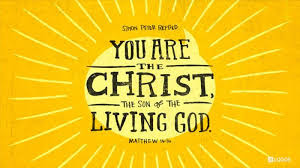
To Jesus’ question, Peter speaks on behalf of the apostles saying, “You are the Christ, the Son of the living God” (Matthew 16:16). Here, Peter, on behalf of the apostles, is confessing Jesus to be the long-awaited Savior of the world, the Anointed One, the Messiah. 


But what does Jesus say to this confession? He says, “Blessed are you, Simon Bar-Jonah! For flesh and blood has not revealed this to you, but My Father who is in heaven” (Matthew 16:17).


Here, Jesus is commending Peter for this great confession, but He is also reminding him that no one, not even Peter himself, could have figured that out all by himself. For Peter only knew this truth of Jesus because God the Father had revealed this truth to him.


And like Peter, we cannot come to know who Jesus is by our own skill or knowledge. No one can believe by their own reason or strength in Jesus Christ or even come to Him. It is only through the gift of God that we come to faith. For it is the Holy Spirit who called us by the Gospel, enlightened us with His gifts, sanctified and kept us in the true faith. It is the Holy Spirit who calls, gathers, enlightens, and sanctifies the whole Christian church on earth, and keeps it with Jesus Christ in the one true faith.


You see, Peter’s confession was only revealed to him through the Word of God.


But what about St. Paul? For today isn’t all about St. Peter. St. Paul, too, did not come to faith in Jesus as His Lord and Savior by his own reason or strength. Remember, Paul was a Pharisee of Pharisees. He was so zealous that he wanted to hunt down, arrest, and even kill every pesky little Christian he could find. 


But, like Peter, God revealed to Paul the truth. Our resurrected and ascended Lord Jesus Christ confronted Paul on the road to Damascus and called him to preach the Gospel that he formerly tried to extinguish. In our Epistle, we heard of Paul’s confession, as he wrote, “I went up because of a revelation and set before them the gospel that I proclaim among the Gentiles” (Galatians 2:2).


Again, Paul, like Peter before him, did not come to the conviction of faith in Jesus by a conscious decision, but it was revealed to Him by God Himself.


Paul confessed the same Jesus as did Peter – the Son of the living God, the Christ who saves us, who gives His life for us, and who lives His life in us. For both Peter and Paul, this confession would consume and shape the rest of their lives. For both Peter and Paul, they would proclaim this confession of Jesus as the Christ, the Savior of sinners to any and all who would hear it, and even to many who would reject it. Peter and Paul would lay down their very lives for this same confession of Christ crucified and risen for sinners.


Today, Jesus asks us, this same question: “But you – y’all here at Prince of Peace Lutheran Church, who do you say that I am?”


And like Peter and Paul before us, God reveals to us the answer. We join Peter and Paul proclaiming, “You are the Christ, the Son of the living God” (Matthew 16:16).


We come to this knowledge not through our own reason or strength, but through the working of the Holy Spirit in us through His Word and Sacraments. And it isn’t enough to just know Jesus as the Christ, but to cling to Him fully by fearing, loving, and trusting in Him above all things. Through the working of the Holy Spirit, He leads us to put Jesus first in our lives. He leads us to self-denial. He leads us to sacrifice our own will for the sake of Christ. He leads us to confess Jesus as the Christ, the Son of the living God even unto death.


Today, you will receive Christ’s very Body and Blood, which strengthens us to lay down our lives to confess this great confession that Jesus is the Christ, the Son of the living God in our day. May His Body and Blood, under simple bread and wine, strengthen you in the forgiveness and life of Jesus. Afterall, “Flesh and blood has not revealed this to you, but My Father who is in heaven” (Matthew 16:17).


Through the Holy Spirit, He has revealed to us that Jesus is the Christ, the Son of the living God, and that through Him, we have peace with God and life everlasting. May we always be led to confess Jesus as our God and Lord and so remain on this unshakable rock of our salvation that He is the Christ, the Son of the living God. Amen.


The peace of God, which surpasses all understanding,

 keep your hearts and minds in Christ Jesus, our Lord. Amen.  

+ SOLI DEO GLORIA +

Sunday, April 6, 2025

"The Tenants of the Vineyard" (Luke 20:9-20)

Listen on Spotify

Grace, mercy, and peace be to you from God our Father and from our Lord and Savior Jesus Christ! Amen! Dear brothers and sisters in Christ:

“One day, as Jesus was teaching the people in the temple and preaching the gospel, the chief priests and the scribes with the elders came up and said to Him, ‘Tell us by what authority you do these things, or who is it that gave you this authority.”


“And [Jesus] began to tell the people this parable: ‘A man planted a vineyard and let it out to tenants.’ …” (Luke 20:1-2, 9a).


The Parable of the Wicked Tenants. So, what led Jesus to tell this parable? Well, today we are marching forward to the Tuesday of Holy Week where we find Jesus teaching at the temple. And like always, Jesus’ teaching is challenged by the Jewish authorities. And knowing that His betrayal and death is near, Jesus directs the sharpest and sternest rebuke and warning against the Jewish authorities.


Though the Jewish authorities were the original target of today’s parable, we must not conclude that this parable has nothing for us to learn. You see, every parable of Jesus is timeless as they speak to people in every age. So, what are we to think about the Parable of the Wicked Tenants?


Jesus said, “A man planted a vineyard and let it out to tenants and went into another country for a long while” (Luke 20:9). Here, we hear that a man planted the vineyard. In Mark’s Gospel, he gives us a few more details on what this Owner did as he also “put a fence around it,” “dug a winepress,”and “built a tower” (Mark 12:1).


From this other information, we hear that the Owner of the vineyard did everything to make His vineyard a good productive one. He put a wall around it to protect it. He dug a winepress so His tenants could produce wine easily. He built a tower so His tenants could see from a distance if any intruders were coming. The Owner of the vineyard did literally everything to make the work of His tenants an easy one. The Owner of the vineyard left nothing undone that was necessary for the welfare of His tenants.


However, the Owner was away for very long while. Eventually, the tenants, the renters of the vineyard, began to truly believe that they were no longer renters, but owners. They were patting each other on the back saying, “Very well done!”


“When the time came, [the Owner] sent a servant to the tenants, so that they would give him some of the fruit of the vineyard. But the tenants beat him and sent him away empty handed” (Luke 20:10). Now, you’d think that the Owner would be a bit perturbed about this incident. You’d think, He would come back and evict the tenants. But He doesn’t. He sends a second servant. And the tenants treat him worse than the first. So, what does the Owner do? He sends a third servant. And he’s treated worse than the first and second. Now what? What does this Owner do? He sends His beloved Son, saying, “Perhaps they will respect Him” (Luke 20:13).


So, what happens next? The tenants saw the Son and they say to themselves, “This is the heir. Let us kill him, so that the inheritance may be ours” (Luke 20:14). So, they threw the Son out of the vineyard and killed him. 


What will the Owner do now? Well, He had been patient before. So, will He continue to be patient in receiving his fruit? No, the Owner’s patience has ended. He will now destroy the wicked tenants and give the vineyard to others who would tend His vineyard.


To this, the chief priests, scribes and elders say, “Surely not!” (Luke 20:16).


In this parable, we have the Owner of the vineyard, who is God the Father. The wicked tenants are forefathers of the chief priests, scribes, and elders. And the servants are the prophets, who have been rejected time and again by the forefathers of the Jewish authorities.


For all intents and purposes, the Parable of the Wicked Tenants is historical. This is what has portrayed in Israel from one generation to the next. A few weeks ago, we heard Jesus’ lament over this very fact: “O Jerusalem, Jerusalem, the city that kills the prophets and stones those who are sent to it!” (Luke 13:34a).


But in the Parable of the Wicked Tenants, Jesus gives His parable a prophetic turn: “This is the heir. Let us kill him, so that the inheritance may be ours” (Luke 20:14). Here, Jesus is telling them and the crowd around them what exactly they would do to Him in just a few days. Here, Jesus is exposing their murderous intent. To put another way, He told them that they would show themselves as apt pupils of their forefathers. 

In fact, they would top the wickedness of their forefathers by killing, not just a human prophet commissioned by God, but Him, the Father’s Son, the fully divine and human Messiah.


So, just as their forefathers did, these Jewish authorities would ensure that the Jewish nation remained their people, under their control, under their sway. “So they threw [Jesus] out of the vineyard and killed Him” (Luke 20:15).


So, what about us? What is your response as you reflected on the Parable of the Wicked Tenants? Who are we to be in this parable? What is our role? 


For those of us who have rented or are currently renting a home or apartment, what would happen at the beginning of each month? Rent is due. Now, who really enjoys paying rent, or even a mortgage? But we have to! If not, you are evicted, or the bank takes your home. That is life in the fallen world. But what about our spiritual life?


When the beloved Son comes to pick up the rent owed to His Father, what will you do? Will you see yourself as the lord of the vineyard? Or as a caretaker of the vineyard? Will you be renters who will give the Owner His due?


And what fruit is the Owner looking to receive of His? Well, those fruits of faith, those fruits of repentance, those stewardship acts of time, talent, and treasure.


Now, it is certainly easy for us to shift from being tenants under the Lord to thinking and acting like we are the owners. And why is that? Well, we all have a problem with authority. And whether we would like to admit it or not, we all have a problem with God’s authority. As sinners, our natural perception is that God’s authority prevents us from getting what we want. 


Just think about it. How often do you withhold from God what is rightfully His? How often do you speak carelessly, or misuse God’s Name? How often do you neglect or despise God’s Word and Sacraments? How often are you not content with what God has given to you?


We certainly do have a problem with God’s authority. The wicked tenants desired the authority for themselves. Even the Owners’ servants weren’t respected and neither was His beloved Son.


Our sinful nature challenges God’s authority as we operate in cahoots with the fallen world. We are tricked by Satan, just like Adam and Eve were in the Garden, to falsely think that God is holding back what we want. And if we sit back and think how the world portrays freedom today, freedom is defined as crossing the boundary of what’s good and right. 


Our fallen sinful nature even leads us to think wrongly about the church. We may get to thinking, “This is my church. The church belongs to me.” We sometimes forget that the church belongs to the Lord. We, the Church, belong to the Lord.


Remember, God planted the vineyard. We didn’t. We did nothing to deserve the vineyard. We didn’t choose God. He chose us and set His love upon us. 


Today, you and I are both the tenants and servants. Upon His death and resurrection, Jesus gave us His vineyard as His stewards. The planting of His vineyard is entirely His doing, not our doing. For Jesus said, “I will build My Church, and the gates of hell shall not prevail against it” (Matthew 16:18) on the truth that He is “the Christ, the Son of the living God” (Matthew 16:16). It is in this way alone that we became God’s cherished children, the objects of His constant love and His constant care.


For us, we no longer rely on the promise of the Lord’s salvation, since salvation is fully accomplished in Jesus Christ, our Lord. 


As His tenants, we are all certainly capable of committing the same wickedness of the chief priests, scribes, and elders and their forefathers. We say things like, “It’s my car. It’s my money. It’s my investment.” But the reality is: It’s God’s car. It’s God’s money. It’s God’s investment. The reality is that we get the privilege in managing those things for Him. 


So, if we are truly listening to the Parable of the Wicked Tenants, you would notice that Jesus is also speaking about the proper giving back of what God has given to you. The good news is that the Owner of the vineyard is patient. He waits a long time before He goes out and sends His servants to collect His rent. He doesn’t evict the tenants. He keeps sending servants. He doesn’t quit. The Owner of this vineyard – Prince of Peace Lutheran Church – is a compassionate, loving and caring God who won’t quit.


Even as His beloved Son is beaten up, thrown out of the vineyard and killed. Even in that very action, God gets His way. For in the rejection of His beloved Son, God the Father is providing a new beginning. God the Father is providing forgiveness and restoration. He is providing the cornerstone upon which His people will be built.


So, when the Owner of this vineyard comes looking for fruit, will you produce His fruit, or will you challenge His authority by your sin by being crushed by the Cornerstone?


Thanks be God that He is patient! Always remember that Jesus died for all those times you challenge His authority. So may we always repent and receive His forgiveness. God holds nothing back from us! When you repent, He always forgives unconditionally! And He not only gives us the vineyard, but He gives us the kingdom! Amen.


The peace of God, which surpasses all understanding,

 keep your hearts and minds in Christ Jesus, our Lord. Amen.  

+ SOLI DEO GLORIA +
Sunday, March 2, 2025

"The Greater Exodus" (Luke 9:28-36)

Listen on Spotify

Grace, mercy, and peace be to you from God our Father and from our Lord and Savior Jesus Christ! Amen! Dear brothers and sisters in Christ:

“And behold, two men were talking with [Jesus], Moses and Elijah, who appeared in glory and spoke of His departure, which He was about to accomplish at Jerusalem” (Luke 9:30-31).


It was about eight days after these sayings. Now, what sayings is St. Luke referring to? The conversation Jesus had with His disciples at the villages of Caesarea Philippi. We remember that conversation, and we know that Peter remembers that conversation, because it was one of those moments that will stick with you.


Jesus asked His disciples, “Who do people say that I am?” (Mark 8:27)


They replied: “Some say John the Baptist, others say Elijah, and others Jeremiah or one of the prophets” (Matthew 16:14).


“But who do you say that I am?” (Matthew 16:15). 


Then Peter says, “You are the Christ, the Son of the living God” (Matthew 16:16).


But then what happened? Jesus took His disciples aside and began to teach them that the Christ must suffer many things from the elders and chief priests and scribes, and be killed, and on the third day be raised.


Then Peter takes Jesus aside and rebukes Him saying, “Far be it from you, Lord! This shall never happen to you” (Matthew 16:22). Then Jesus turned and said to Peter, “Get behind me, Satan! You are a hindrance to Me. For you are not setting your mind on the things of God, but on the things of man” (Matthew 16:23).


Then about eight days after that conversation, Jesus invites Peter, James and John up a mountain to pray. Peter must still be thinking about what had happened just days ago. He confessed Jesus to be the Christ, but he was soon rebuked for his lack of faith. Could Jesus bring that up again? Could Jesus bring up that He must suffer and die? 


What does it mean that Jesus has to suffer? Why does the Christ have to die?


So, Peter, James and John follow Jesus up a mountaintop. Jesus picks the spot up on the mountain to pray, and He begins to pray. But for some reason, the disciples fall asleep. Could it be that Jesus prayed a long time? Maybe. Could it be because of the tiring trek up the mountain? Maybe. But we know that they fell asleep.


But as Jesus is praying, He is visited by Moses and Elijah, and they are talking with Jesus about His departure. The Greek word translated “departure” here literally means “exodus” – a way out. From the word “exodus” we get the word “exit.”


Now, Jesus doesn’t have to argue with Moses and Elijah about His suffering. They know all about suffering. This is what the conversation is all about! 


This word “exodus” ought to call to mind the exodus of the Israelites, the greatest redemptive event in Old Testament history. That saving deed of God was a forward-pointing prophecy of the perfect and complete salvation to be wrought in this “exodus” of Jesus.


This “exodus” was the topic of conversation between Moses and Elijah. That first exodus used water as a means of death – the Egyptians drowned. The new exodus also involves death – the death of Christ – but what’s different is that through Christ’s death, those who are baptized into Christ die to sin as they die with Christ. But in this new exodus, God will pour out His Means of Grace – His Word and Sacraments – to sustain His people in the arid desert of this fallen world.


Jesus would have to die so that we would live.


God the Father’s words at Christ’s Baptism are echoed at His Transfiguration: “This is My Son, My Chosen One; listen to Him” (Luke 9:35).


By means of this new exodus, God will vanquish the serpent, Satan, and redeem His people from the powers of sin, death, and hell.


So, just as Moses led the Israelites to the Promised Land, so now Jesus will lead His people to eternal glory. But before Jesus would lead His people to glory, He must first suffer.


There, upon that mountaintop, Moses and Elijah were conversing about what was soon to be accomplished: our substitutionary atonement. They were discussing the theology of the cross. 

Our God is a god of paradox. God reveals Himself by hiding Himself in Christ. God heals His people by suffering in Christ. God’s power is seen in weakness. God gives life by dying.


One would expect God to tell us to shape up, for us to merit His love. But He doesn’t. Instead, He puts all our sins upon Himself. He would be crucified in our place to take our punishment for our sins. He would be crucified in our place for breaking God’s Law. Our sinless Lord would take upon Himself all our sins to give us exodus from the consequences of our sins.


But then Peter, James and John wake up. We don’t know who woke up first. But you can imagine one of them waking up and rubbing his eyes as he sees Jesus dazzling white and hears the conversation and then nudging the others to wake up to see this! When they became fully awake, they saw Jesus’ radiant face like the sun and His clothes beaming white. The disciples listened to the conversation with amazement. 


And then as Moses and Elijah began to depart, Peter says to Jesus: “‘Master, it is good that we are here. Let us make three tents, one for you and one for Moses and one for Elijah’ – not knowing what he said” (Luke 9:33).


This is so typical of Peter. He speaks when he ought to listen. We are often like Peter. We, too, would like to prolong our “mountaintop” experiences as we leave behind the toil and trouble of this fallen world behind.


So often we are reluctant to see the big picture of Jesus. We look for all the glory. We look for signs, wonders, and miracles. But this glory of the Transfiguration serves as a prefiguring of Christ’s suffering and death. Jesus, Moses and Elijah understood that there was no contradiction between this moment of glory and the cross awaiting in Jerusalem.


For Moses and Elijah, the Transfiguration is seen most clearly through Christ’s suffering on Calvary. There, nailed to the cross, the glory of God and the love of God is revealed. 


It is only through the cross that we see God’s glory shining. Christ says, “It is necessary the He should suffer many things, be killed, and rise on the third day.”


He came to suffer and die, so that He can be your Savior. He died so that you may share in His glory.


The Transfiguration of Our Lord shows that Christ must die. The crucifixion would not be an unfortunate incident. The crucifixion was rather an essential part of God’s eternal plan for the salvation of the world. Moses and Elijah confirmed that. Through His death on the cross, the Law and the Prophets are fulfilled. By grace through faith in Christ alone, we are no longer under the curse of the Law. But now, having received forgiveness, life and salvation through Christ atoning death, we want to follow the Law and keep the Law. Now, we don’t have to, but we get to. Jesus has shown us grace by providing us the way out of this fallen world filled with sin and death.


Receiving the Means of Grace is now the activity of our exodus as God sustains us to life everlasting. In Holy Baptism, your Old Adam was drowned as you came to life in Christ. Through the water and the Word, you were joined to Christ who hung on the cross. You were baptized into His death. For His death is the only way out from the bondage to sin. In the Lord’s Supper, you are again partaking in Christ’s death as you partake of Christ’s true Body and Blood broken and shed for you for the forgiveness of your sins, which begets life everlasting. 


Now, all of us who confess our sins and receive God’s forgiveness are able to depart in peace.


Jesus accomplished His work through His death, resurrection, and ascension. Through Christ and His Means of Grace, He has prepared the way for our exodus – the greater exodus – as we daily die to sin and are made alive in Christ through repentance and faith knowing that He has accomplished all that is necessary for our salvation. Amen.


The peace of God, which surpasses all understanding,

 keep your hearts and minds in Christ Jesus, our Lord. Amen.  

+ SOLI DEO GLORIA +